
Most high-traffic car dealerships benefit from using both a day porter and a night cleaning crew.
A day porter handles visible cleaning issues while customers and employees are present, including spills, fingerprints, overflowing trash, restroom checks, customer-lounge resets, and debris near entrances or service drives. A night cleaning crew handles planned, more detailed work such as floor care, vacuuming, glass cleaning, restroom cleaning, office cleaning, and a complete facility reset after closing.
The right combination depends on the dealership’s operating hours, customer traffic, service volume, facility layout, flooring, and presentation standards.
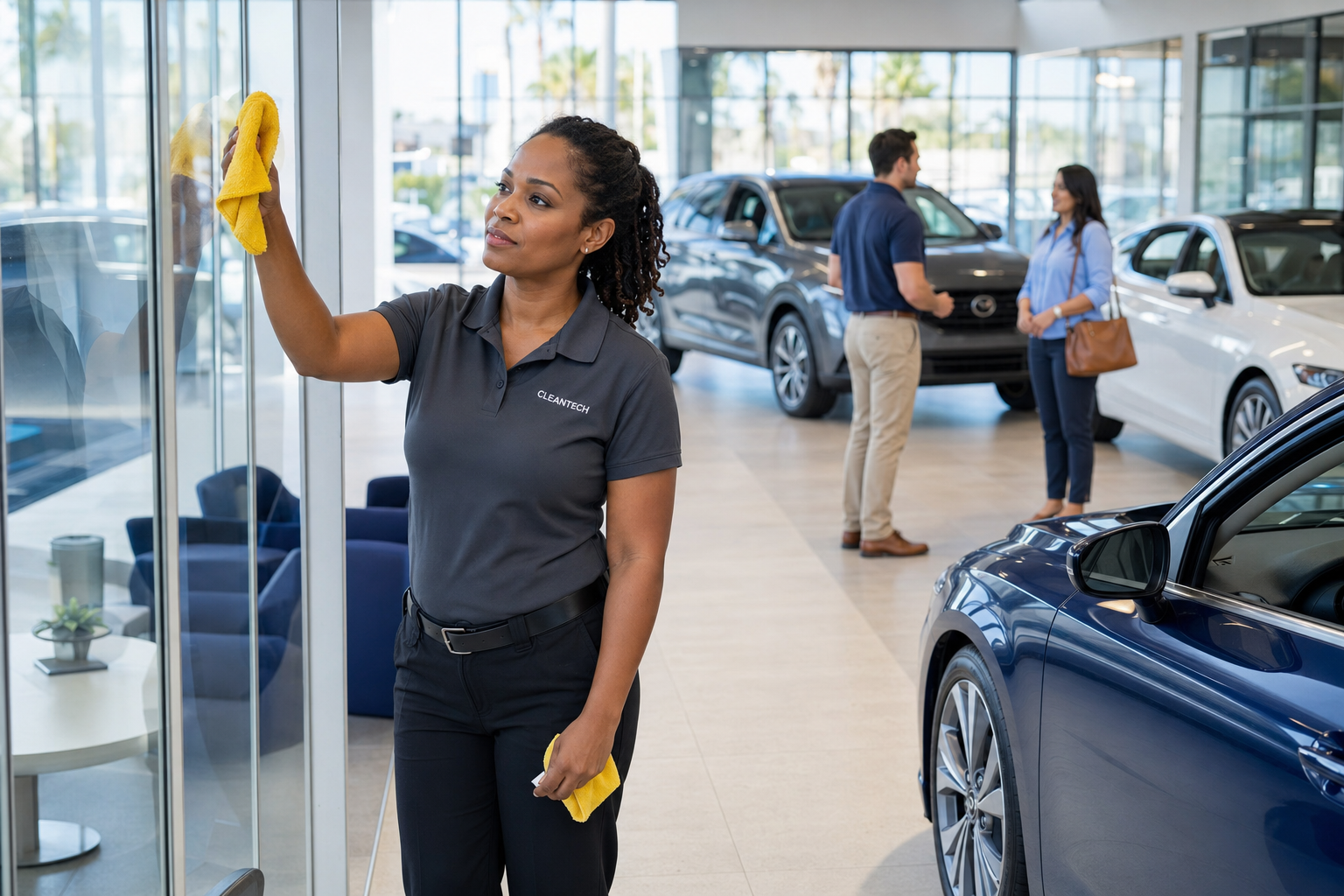
Day Porter vs. Night Cleaning: What Is the Difference?
A day porter works during dealership operating hours. The porter’s job is to keep customer-facing and high-traffic areas presentable as conditions change throughout the day.
A night cleaning crew works primarily after customers and most employees have left. The crew can perform more involved cleaning without creating noise, blocking walkways, interrupting sales conversations, or working around active service operations.
Cleantech provides both day porter services and recurring janitorial services for commercial properties in Southern California. Its day porter program supports facilities that require ongoing attention rather than waiting until after-hours cleaning begins.
| Service consideration | Day porter | Night cleaning crew |
|---|---|---|
| Primary schedule | During business hours | After closing or during low-occupancy hours |
| Main objective | Maintain appearance and respond to developing issues | Complete the planned cleaning scope and reset the facility |
| Typical priorities | Spills, trash, restrooms, fingerprints, entrances, lounge upkeep and visible debris | Floors, offices, restrooms, glass, detail cleaning and scheduled maintenance |
| Response style | Proactive and responsive | Planned and systematic |
| Best suited for | High-traffic, customer-facing areas | Detailed or disruptive cleaning tasks |
| Main limitation | May not have time or access for extensive floor and detail work | Cannot correct problems that develop during the following business day |
Does a Car Dealership Need a Day Porter?
A dealership should consider day porter services when visible cleaning problems regularly develop before the night crew arrives.
This is especially common at dealerships with:
- Long sales and service hours
- Busy service drives
- Frequently used customer restrooms
- Showroom glass that quickly collects fingerprints
- Coffee, food, or refreshment stations
- High-gloss floors that show dirt and tire marks
- Large customer lounges
- Weekend traffic
- Multiple entrances
- Outdoor inventory lots and customer walkways
- Sales or service employees who are regularly pulled away from their jobs to address cleaning issues
Not every dealership needs a full-time porter. A smaller location may only need targeted support during its busiest service and sales periods. A high-volume dealership may need a dedicated porter throughout most or all of the customer-facing day.
The goal is not to add labor without a reason. It is to identify when the dealership’s nightly cleaning program is no longer enough to maintain its expected appearance throughout operating hours.
What Dealership Areas Should Be Cleaned During the Day?
The most effective schedule assigns each area to the service window that matches how the area is used.
| Dealership area | Best service window | Main concern |
| Showroom | Daytime touchups plus overnight cleaning | Glass, floors, vehicle presentation and first impressions |
| Customer lounge | Frequent daytime attention | Trash, spills, seating, tables and refreshment stations |
| Customer restrooms | Scheduled daytime checks plus overnight cleaning | Supplies, odors, fixtures and overall appearance |
| Service drive | Multiple daytime checks plus planned after-hours cleaning | Debris, moisture, tire soil and heavy traffic |
| Sales and F&I offices | Primarily after hours | Privacy, disruption and access |
| Employee areas | Daytime checks plus after-hours cleaning | Trash, food debris, floors and shared surfaces |
| Entrances and walkways | Before opening and throughout the day | Litter, glass, mats, water and tracked-in soil |
| Exterior inventory lot | Early morning or low-traffic periods | Litter, presentation and customer pathways |
The exact responsibilities should be documented in the dealership’s cleaning scope. These tasks are examples and should not be assumed to be included automatically in every service agreement.
How Should a Dealership Showroom Be Cleaned?
The showroom usually needs a combination of daytime appearance checks and detailed overnight cleaning.
During business hours, a day porter can address:
- Fingerprints on entrance doors and interior glass
- Visible dust or debris around display vehicles
- Spills and tracked-in soil
- Trash near desks and customer seating
- Entry mats that have shifted or become saturated
- Visible marks on high-gloss flooring
- Presentation issues before appointments or special events
After hours, the night crew can complete the full showroom reset. Depending on the approved scope, this may include vacuuming, mopping, detailed floor care, dusting, interior glass cleaning, trash removal, and cleaning around showroom furniture and displays.
The division matters because some floor and glass work is difficult to complete safely and consistently while customers, employees, and vehicles are moving through the space.
Cleantech’s car dealership cleaning guide identifies showroom floors, glass, restrooms, waiting areas, offices, carpet, tile, and pressure-washing needs as important parts of a dealership cleaning program.
How Often Should Customer Lounges Be Checked?
A customer lounge should be checked according to actual usage rather than cleaned only once at the beginning or end of the day.
A busy lounge can change quickly. Coffee may spill, food packaging may accumulate, tables may need wiping, chairs may move out of place, and trash may fill before the next scheduled nightly service.
A practical daytime lounge check may include:
- Removing visible trash
- Wiping tables and counters
- Spot-cleaning spills
- Checking floors around coffee and refreshment stations
- Straightening chairs
- Cleaning visible fingerprints
- Checking waste and recycling containers
- Reporting upholstery stains or maintenance issues
The porter does not need to interrupt customers unnecessarily. The service plan should establish how to maintain the area discreetly while it remains in use.
Should Dealership Restrooms Be Cleaned During Business Hours?
Customer restrooms should receive scheduled daytime checks when they are used heavily enough that supplies, odors, trash, or visible soil become problems before closing.
A daytime restroom check is different from a full overnight cleaning. The daytime visit focuses on immediate presentation and usability, including:
- Checking soap, paper products, and other approved supplies
- Removing trash
- Wiping visibly affected fixtures and counters
- Addressing spills
- Checking floors
- Reporting plumbing or maintenance concerns
- Correcting noticeable odor or appearance problems within the approved scope
The overnight crew can then complete the full restroom-cleaning procedure when the area is less likely to be occupied.
Cleaning plans should also distinguish between routine cleaning and disinfection. Products should be appropriate for the surface and used according to their labels. The U.S. Environmental Protection Agency’s guidance on identifying greener cleaning products can help facilities evaluate products using recognized environmental and health-related criteria.
Why Does a Service Drive Need a Different Cleaning Plan?
A dealership service drive is both a customer arrival area and an active operational space. It cannot be managed exactly like a showroom or a standard office entrance.
Vehicles continually bring in:
- Dirt and roadway debris
- Water during wet weather
- Tire marks
- Leaves and exterior litter
- Dust
- Small amounts of vehicle-related residue
The service drive may also have advisors, technicians, customers, equipment, vehicle traffic, and open work areas operating at the same time. That makes timing and scope especially important.
Daytime Service-Drive Priorities
During business hours, a porter may be assigned to:
- Remove visible litter and loose debris
- Monitor customer walkways
- Address ordinary spills that fall within the approved scope
- Check entrance glass and doors
- Maintain nearby trash containers
- Straighten mats
- Report leaks, automotive-fluid spills, damaged surfaces, or other conditions requiring specialized attention
After-Hours Service-Drive Priorities
When vehicle and customer traffic is lower, the night or specialty crew may be able to perform more involved work, such as:
- Detailed floor cleaning
- Approved degreasing
- Pressure cleaning when appropriate
- Wall, post, and door detailing
- Cleaning around fixed equipment where access is permitted
- Removing accumulated soil from less accessible areas
Automotive fluids, regulated waste, hazardous materials, and specialty spill response must be clearly addressed in the contract. Dealership management and the cleaning provider should document which party is responsible, which products and procedures are approved, and which incidents require a specialized vendor.
The OSHA Walking-Working Surfaces standard, 29 CFR 1910.22 requires workplace surfaces to be maintained in a clean, orderly, and sanitary condition. It also addresses keeping floors clean and, where feasible, dry, as well as correcting or guarding against hazards such as leaks and spills.
This is one reason service-drive inspection and response cannot always wait until the dealership closes.
What Should Be Cleaned Primarily After Hours?
Some dealership spaces are usually better suited to night cleaning because daytime service could interrupt work, compromise privacy, or create unnecessary congestion.
Sales and Management Offices
Night cleaning allows crews to vacuum, remove trash, dust accessible surfaces, and clean floors without interrupting meetings or customer conversations.
Finance and Insurance Offices
F&I areas may contain private documents and sensitive work materials. Access instructions, desk-cleaning boundaries, and security procedures should be documented before service begins.
Conference and Training Rooms
These spaces can be cleaned and reset after scheduled meetings have ended.
Detailed Floor Care
Machine scrubbing, carpet cleaning, floor refinishing, and other specialty floor procedures may require sections to be closed temporarily. These tasks should be scheduled during low-traffic periods.
Cleantech’s commercial floor and carpet cleaning services can be linked here for readers who need more information about scheduled floor maintenance.
Full Interior Glass Cleaning
Daytime touchups remove obvious fingerprints. More extensive glass cleaning is usually more efficient after hours when doors, offices, and customer areas are less active.
What About the Exterior Lot and Dealership Entrances?
The exterior lot is part of the customer’s experience before they enter the building.
Lot and entrance maintenance may include litter removal, attention to customer walkways, exterior trash, pressure cleaning, and other property-maintenance tasks included in the approved plan.
Cleantech offers parking lot management and maintenance services, along with high-pressure cleaning, window cleaning, and floor and carpet care for commercial facilities.
Early morning is often the least disruptive time for a full lot inspection. Additional daytime checks may be needed after deliveries, windy conditions, promotional events, weekend traffic, or periods of unusually heavy customer activity.
Daytime lot work should be coordinated carefully around moving vehicles, customers, inventory displays, and dealership operations.
Example Cleaning Plan for a High-Volume Car Dealership
The following schedule is an example, not a universal recommendation. A final program should be developed after reviewing the dealership’s hours, square footage, traffic patterns, flooring, service volume, staffing, and existing responsibilities.
| Service period | Suggested priorities |
| Before opening | Complete showroom floors, vacuuming, interior glass, offices, restroom cleaning, lounge reset, entrances and initial lot inspection |
| Morning service peak | Monitor service drive, entrances, customer restrooms, coffee area, lounge and visible showroom issues |
| Midday | Restroom checks, trash removal, spill response, glass touchups, lounge reset and customer-walkway inspection |
| Afternoon | Repeat checks based on traffic, prepare customer areas for evening sales activity and report unresolved facility issues |
| Near closing | Final daytime restroom and lounge checks, trash review and communication with the night crew |
| After closing | Complete the full janitorial scope, detailed floors, offices, restrooms, glass, approved service-drive work and facility reset |
The daytime and nighttime teams should not operate as separate programs. The porter should communicate unresolved issues to the night crew, while the night crew should identify recurring conditions that need attention during the following day.
How Can a Dealership Choose the Right Coverage Model?
Use the following decision rule.
Night Cleaning May Be Enough When:
- Customer traffic is relatively light
- The dealership has shorter operating hours
- Restrooms remain presentable throughout the day
- Employees can report isolated problems without being regularly pulled into cleaning work
- The showroom and service drive do not develop visible issues between nightly services
Add Part-Time Day Porter Coverage When:
- Problems concentrate around predictable morning, lunch, afternoon, or weekend peaks
- The service drive is busiest during a specific block of time
- Restrooms need one or more scheduled daytime checks
- The lounge or refreshment area needs regular attention
- Entry glass and showroom floors need touchups before the end of the day
Consider Full-Shift Day Porter Coverage When:
- Customers move through the property continuously
- The service department and showroom have overlapping high traffic
- The dealership has long operating hours
- Several customer-facing areas require repeated checks
- Management expects the facility to remain presentation-ready throughout the day
- Cleaning complaints or visible issues frequently arise before the night crew arrives
The best coverage model is the one that follows the dealership’s traffic rather than assigning equal attention to every area at every hour.
Questions to Ask During a Dealership Cleaning Walkthrough
A walkthrough should produce a precise cleaning plan, not just a square-footage estimate.
Dealership managers should ask:
- Which areas are customer-facing, employee-only, or restricted?
- When do sales, service, and delivery traffic peak?
- Which cleaning problems most often appear during operating hours?
- Who currently responds when a customer spill occurs?
- How frequently should restrooms and customer lounges be checked?
- Which flooring and glass surfaces require special products or equipment?
- What work can only be completed after vehicles or employees leave?
- Who is responsible for automotive-fluid spills and regulated waste?
- Which areas require keys, badges, alarms, or escort access?
- How will completed work, inspections, and follow-up items be documented?
- Who should receive urgent service communications?
- How will the day porter and night crew hand off unresolved issues?
- Which supplies are provided by the dealership, and which are provided by the cleaning company?
- Are promotional events, vehicle launches, or high-volume weekends part of the coverage plan?
- How will the cleaning scope be adjusted when traffic or operating hours change?
These questions help separate assumptions from contractual responsibilities.
Why Dealerships Use Cleantech for Day Porter and Night Cleaning
Cleantech Inc. supports dealerships and other large commercial properties throughout Southern California with recurring janitorial service, day porter support, floor care, glass cleaning, lot maintenance, and related facility services.
The company’s About Cleantech page explains its ethical commercial-cleaning approach and its focus on substantial commercial facilities.
Cleantech’s published accountability practices include:
- A 100% W-2 workforce
- Bilingual on-site supervision
- GPS service verification
- Timestamped photo logs
- Site-specific service planning
- Supervisor inspections
- Ongoing account communication
These systems are designed to give dealership leaders better visibility into whether the approved work was completed and where follow-up may be needed.
The cleaning plan can be divided by dealership area, traffic pattern, and service window so that daytime support and nightly cleaning work together instead of duplicating tasks.
Request a Dealership Cleaning Walkthrough
A dealership cleaning proposal should account for more than total square footage.
Cleantech can review your:
- Showroom
- Customer lounge
- Restrooms
- Sales and administrative offices
- Service drive
- Entrances
- Exterior walkways
- Inventory lot
- Flooring and glass
- Peak operating hours
Request a dealership cleaning walkthrough to determine which areas need day porter attention, which tasks should happen after hours, and where a combined coverage plan may provide the best fit.
Frequently Asked Questions
Does Every Car Dealership Need a Day Porter?
No. A dealership with limited traffic and shorter operating hours may be adequately supported by nightly cleaning and a scheduled daytime check. High-volume dealerships with busy restrooms, lounges, showrooms, and service drives are more likely to benefit from dedicated daytime coverage.
What Does a Dealership Day Porter Do?
A dealership day porter maintains customer-facing and high-traffic areas during business hours. Depending on the approved scope, duties may include restroom checks, trash removal, spill response, showroom glass touchups, customer-lounge upkeep, entrance checks, and service-drive monitoring.
Can a Night Cleaning Crew Replace a Day Porter?
A night crew can reset the dealership after closing, but it cannot correct issues that develop during the next operating day. If visible problems regularly remain until nighttime service begins, the dealership may need part-time or full-shift day porter support.
Should a Service Drive Be Cleaned During the Day or at Night?
Both may be appropriate. Daytime checks can address visible debris, customer walkways, ordinary spills within scope, and developing presentation issues. More detailed floor or pressure cleaning is generally better suited to lower-traffic or after-hours periods.
How Often Should Dealership Restrooms Be Checked?
The frequency should be based on customer and employee traffic. Instead of relying on one universal interval, the dealership should establish scheduled checks during peak periods and define conditions that require an additional visit, such as low supplies, full trash, spills, or visible soil.
What Dealership Areas Usually Need Daytime Cleaning?
Customer restrooms, showrooms, lounges, entrances, refreshment stations, customer walkways, and service drives are the areas most likely to need daytime attention. Offices and detailed floor work are generally better suited to after-hours cleaning.
How Many Day Porter Hours Does a Dealership Need?
The answer depends on operating hours, service appointments, showroom traffic, restroom use, the number of customer-facing areas, and the time it takes to complete each inspection route. A walkthrough and traffic review should be completed before assigning hours.
Is Day Porter Service Included With Nightly Janitorial Cleaning?
Not automatically. Day porter service and nightly janitorial cleaning may be separate scopes, schedules, or staffing assignments. The proposal should state exactly what is included, when each task will occur, and how daytime and nighttime teams will communicate.
